
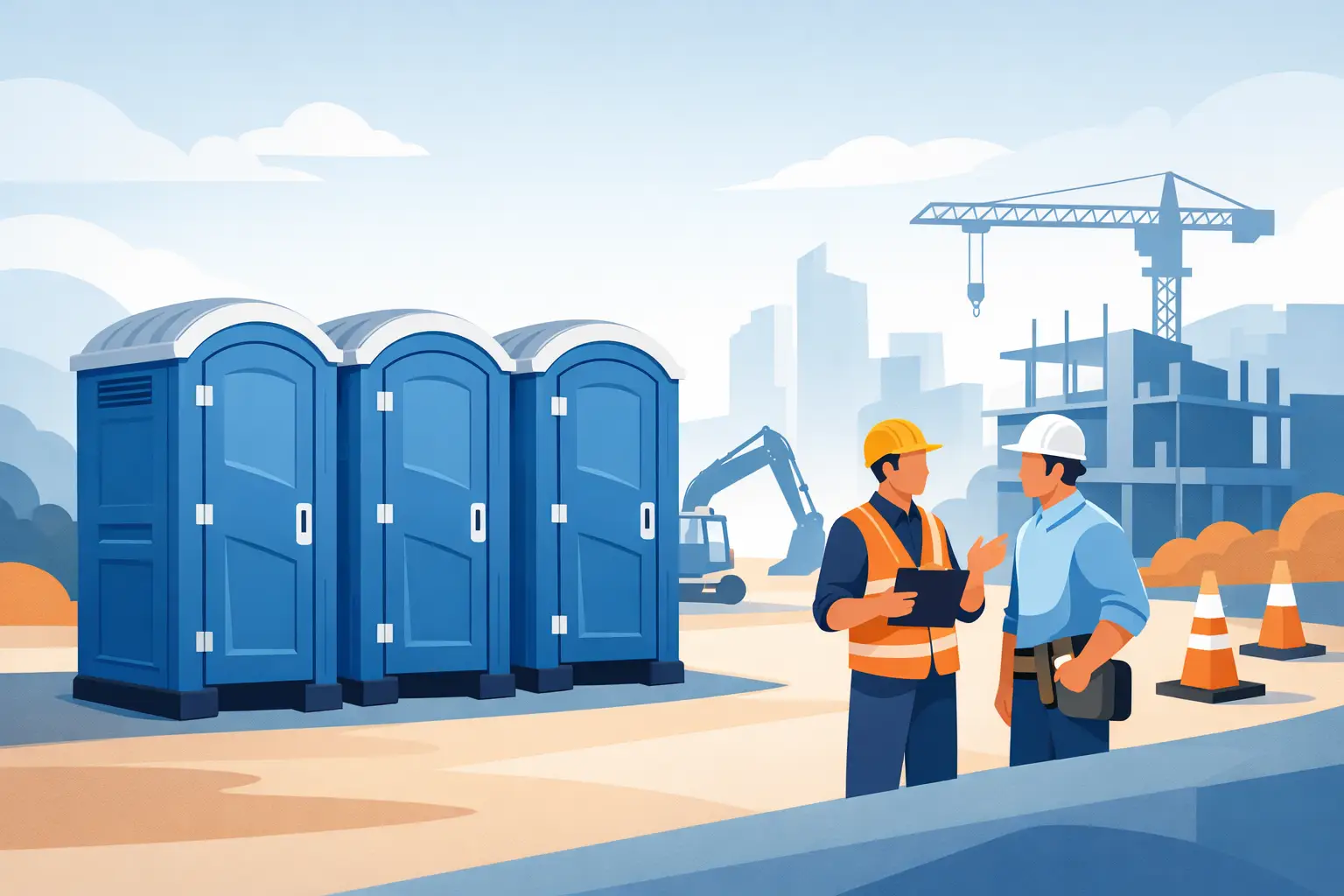
A portable toilet that arrives late, sits in the wrong location, or misses service day can quickly become a jobsite problem.
The best porta potties for jobsites are not simply the least expensive units available. They are the units that match crew size, site conditions, project duration, accessibility requirements, and the level of service needed to keep the work area clean.
For Connecticut contractors, site supervisors, and property managers, the right rental plan keeps workers comfortable, helps maintain sanitation standards, and prevents a basic site necessity from disrupting the schedule. Start with the work being performed and the people on site, then select the restroom setup that supports both.
Best Porta Potties for Jobsites: Start With the Standard Unit
For most construction projects, a standard portable toilet is the practical starting point.
These units are built for active work environments, with a toilet, urinal, hand sanitizer dispenser, ventilation, and a locking door. They are compact enough for many jobsite layouts while providing the basic privacy and sanitation a crew needs throughout the day.
Standard units are usually the best fit for residential construction, roofing projects, remodeling work, utility repairs, landscaping crews, road work, and short-term commercial jobs. They are also a sensible choice when the site has uneven terrain or limited access, since they can generally be placed close to the work area without taking up much room.
The trade-off is simple: a standard unit covers the essentials, but it does not offer the added handwashing capability or interior space that some sites require. If workers are handling food, chemicals, adhesives, or materials that call for more frequent handwashing, add a portable sink or choose a restroom plan with a handwashing station nearby.
Match the Number of Porta Potty Units to Your Crew and Schedule
One restroom may be enough for a small crew on a brief project. It may be completely inadequate for a larger commercial site operating six days a week. The right quantity depends on crew size, shifts, project length, and whether subcontractors, inspectors, delivery drivers, or visitors will also use the facilities.
A useful planning approach is to think beyond the regular headcount. If a site normally has 10 workers but regularly adds concrete crews, electricians, or framing subcontractors, plan for the busy days rather than the quiet ones. An undersupplied restroom setup leads to lines, more wear on each unit, and a faster decline in cleanliness between service visits.
For longer projects, service frequency matters as much as the initial unit count. A portable toilet should be pumped, cleaned, restocked, and inspected on a dependable schedule. High-traffic sites may need more frequent service, especially during hot weather, rainy periods, or phases of construction with larger crews. It is often better to add a unit or increase service than to wait until conditions become unacceptable.
Consider Separate Units for Public-Facing Work
Some jobsites bring workers and the public into the same area. Renovations at occupied apartment buildings, retail construction, school projects, municipal work, and residential builds with frequent client visits all benefit from separating restroom access when possible.
A designated unit for workers limits unnecessary traffic through a customer or visitor restroom. It also helps maintain a cleaner, more professional experience for property owners, tenants, and clients who may be evaluating the project while work is underway.
When a Flushable Unit Makes Sense
Flushable portable restrooms are a step up from standard units and can be a strong choice for projects where appearance, comfort, or client experience matters. They are particularly useful at model-home construction sites, commercial renovations, property improvement projects, and locations where owners, architects, or managers will visit regularly.
The main benefit is a more familiar restroom experience. A flushable unit can help control odors and improve comfort, which may be worthwhile on long-duration projects or sites with professional visitors. It is not always necessary for a rough construction zone, but it can be the right call when the restroom reflects directly on the contractor or property manager.
A flushable unit still needs suitable placement and routine servicing. Before reserving one, confirm that the delivery route and the intended location can accommodate the unit safely. Soft ground, steep slopes, narrow gates, overhead branches, and active equipment paths can all affect placement.
Don’t Overlook ADA-Compliant Portable Restrooms
An ADA-compliant portable restroom is larger than a standard unit and designed to provide accessible entry and interior space. It typically includes a ground-level entry, wider door opening, handrails, and room for a wheelchair user to maneuver.
Whether an ADA unit is required depends on the project, local requirements, site use, and who needs access. Public-facing construction locations, municipal projects, commercial properties, and sites with visitors should receive particular attention. Even when a requirement is not clear, providing an accessible option is a practical way to accommodate workers, visitors, inspectors, and clients.
Because these units have a larger footprint, placement deserves extra planning. The route to the unit should be reasonably level, clear of stored materials, and accessible from the active site. Do not place an ADA restroom behind debris piles, across mud-heavy areas, or where parked equipment blocks access.
Add Handwashing Where the Work Demands It
Hand sanitizer inside a standard unit is useful, but it is not a substitute for running-water handwashing in every situation. Portable sinks are especially helpful on jobsites involving food service contractors, schools, childcare-related work, medical facilities, public-facing renovations, and tasks where workers routinely get paint, dust, grease, or construction materials on their hands.
A portable sink positioned near the restroom area gives workers a clearer option for washing up before breaks and after using the restroom. It can also reduce the temptation to use a customer’s indoor sink or temporary plumbing that is not yet ready for regular use.
For larger sites, consider placing handwashing stations near break areas as well as restroom locations. Convenience affects use. If the sink is far from the crew’s normal path, workers are less likely to use it consistently.
Plan Your Porta Potty Placement Before Delivery Day
The best unit can still create problems if it is placed poorly. Choose a location that is easy for workers to reach, accessible for the service truck, and far enough from active work zones to avoid damage or obstruction. The goal is a stable, practical location that does not interfere with deliveries, excavations, material staging, or equipment movement.
Avoid placing portable toilets at the bottom of a slope, beside open trenches, near crane swing paths, or directly in a vehicle travel lane. A level, firm surface is ideal. If the site will change rapidly as the project progresses, discuss possible relocation needs at the start of the rental.
Service access is just as important. A unit tucked behind a locked gate, stacked materials, or temporary fencing may be difficult to clean on schedule. Keep the access path open and let the sanitation provider know about gate codes, delivery windows, site contacts, or changing traffic patterns.
Choose a Rental Partner That Can Keep Up
Price matters, but a low rate has little value if delivery is delayed, service is inconsistent, or pickup becomes an end-of-project headache. Look for a provider that can clearly explain unit options, schedule service around the needs of the site, and respond when plans change.
That responsiveness is especially valuable in Connecticut, where weather, permitting timelines, utility coordination, and project schedules can shift quickly. EnviroFlush provides clean, dependable portable restroom rentals with flexible terms, fast delivery, and service options for construction sites across the state.
Before confirming a rental, communicate the crew size, project dates, access conditions, expected public use, and any accessibility needs. Clear details upfront help prevent the two most common problems: too few units and a service schedule that does not match actual site traffic.
A well-maintained restroom setup is a small part of the overall build, but workers notice when it is handled well. Choose units for the real conditions on site, place them where they can be used and serviced safely, and adjust the plan as the crew and project change.